
PTFE Mesh Melt
Applications and Advantages of PTFE Mesh Conveyor Belts
Applications
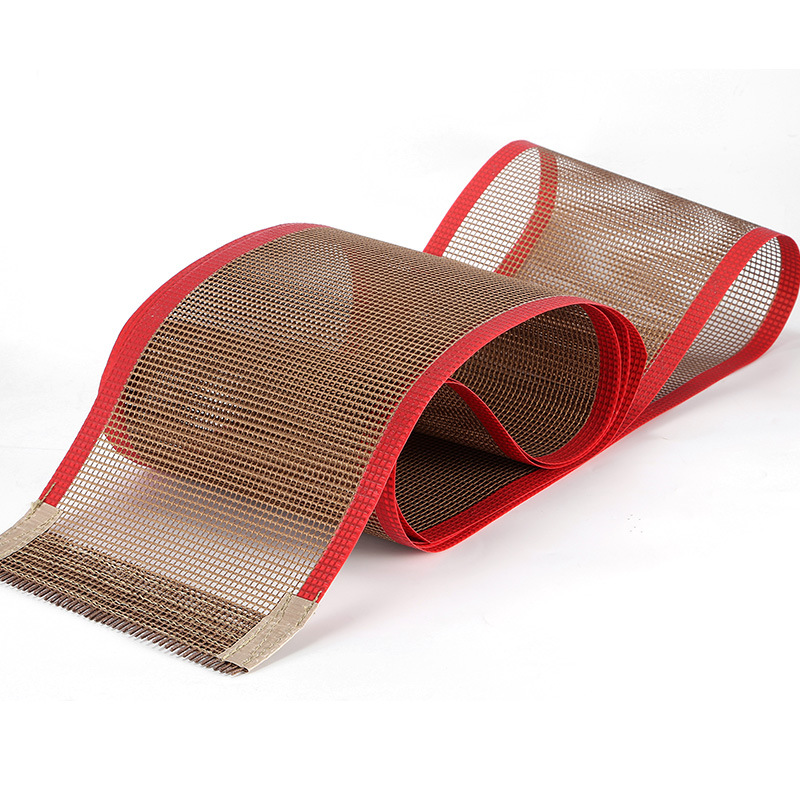
· Food industry: baking, roasting, freezing, and drying (e.g., biscuit ovens, nut roasters, fish sticks, and frozen food conveyors) – the open mesh allows hot air, steam, or cold air to circulate evenly around the product.
· Textile and printing: fabric setting, screen-printing drying, and ink curing – the mesh enables rapid moisture/ solvent evaporation.
· Packaging: heat-sealing, shrink-wrap tunnels, and blister packaging – the non-stick surface prevents adhesive residues.
· Chemical and pharmaceutical: granulation, coating, and drying of pellets or powders – the mesh allows drainage and airflow while resisting aggressive chemicals.
· Electronic and solar: PCB soldering, UV curing, and lamination – the belt withstands high temperatures and offers stable tracking.
· Paper and nonwovens: pulp drying, tissue conveying, and composite bonding – the open structure reduces suction drag and improves dewatering.
Advantages
· Excellent air/fluid permeability – the mesh opening enables thorough drying, cooling, or washing from both sides, increasing process efficiency.
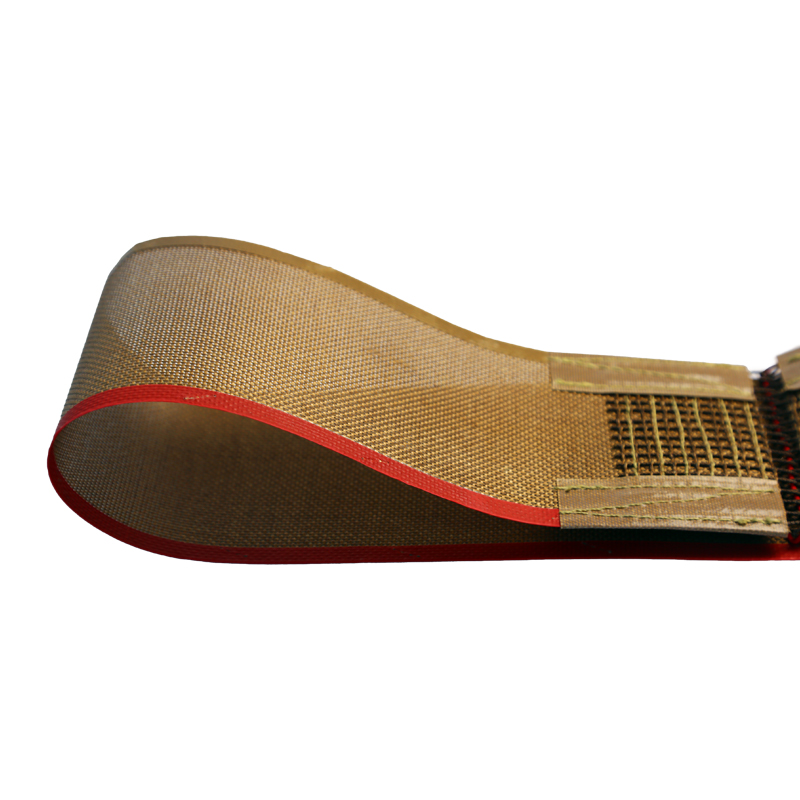
· Non-stick surface – PTFE coating prevents adhesion of sticky materials, reducing product waste and simplifying cleaning.
· Wide temperature range – performs continuously from –70 °C to +260 °C, suitable for both deep-freezing and high-temperature baking.
· Chemical inertness – resists oils, acids, alkalis, and most solvents, ensuring long service life in harsh environments.
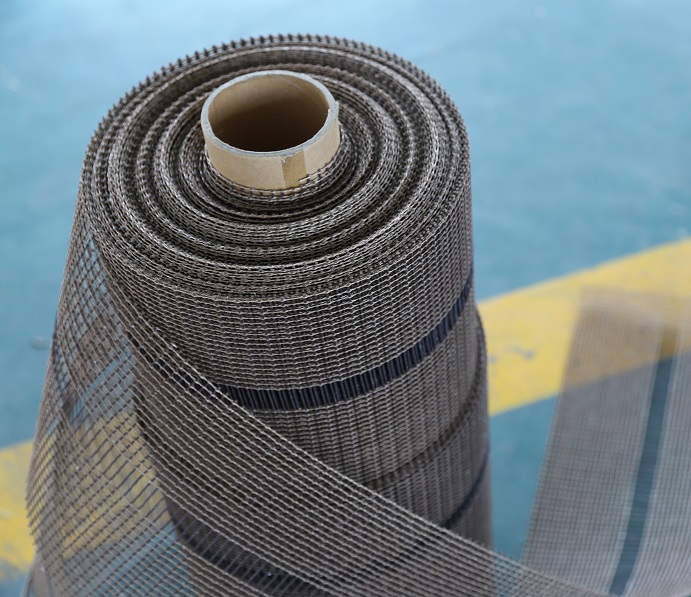
· High strength and dimensional stability – fiberglass or Kevlar scrim provides low elongation and good tension resistance, even under heavy loads.
· Easy cleaning and sanitation – the open mesh allows steam or water spray to pass through, meeting hygiene standards in food and pharma.
· Low friction and anti-static options – reduce wear and improve handling of static-sensitive products.
· Lightweight and flexible – enables small pulley diameters and easy installation, with good tracking performance.
These features make PTFE mesh belts ideal for continuous processes requiring both material release and efficient heat/mass transfer.